Expert Surgical Care
From gallbladder disease to hernia repair and screening colonoscopy, our team offers comprehensive surgical evaluation and treatment. If you recognize your symptoms below, request a consultation — many conditions are best treated early. Surgical procedures are performed in person and are currently limited to the Salt Lake City metro area and Northern Utah; we are focused on building our local, in-person practice in the Salt Lake City area.
🤖 Robotic Surgery▾
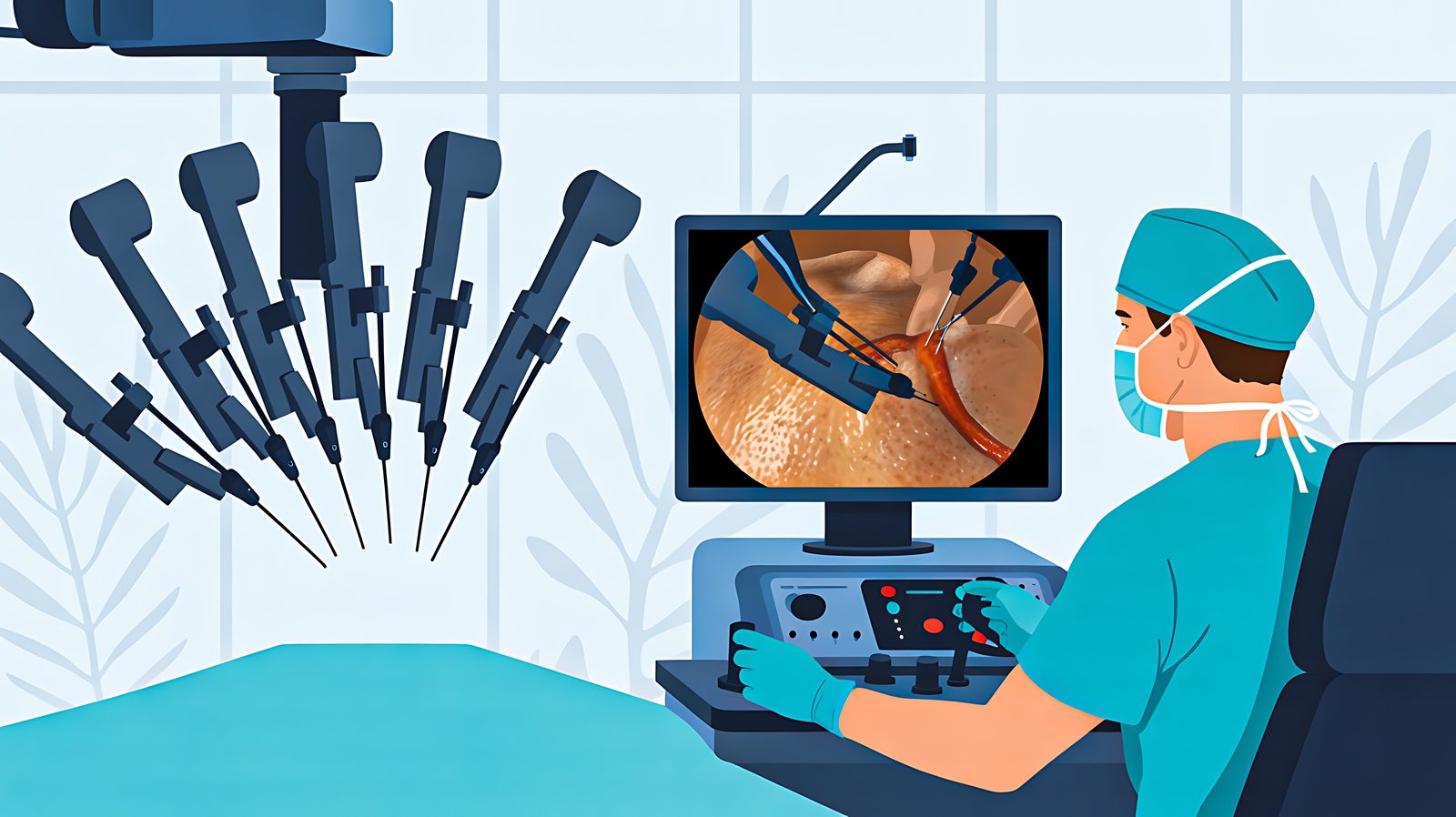
Many of our procedures are performed using a state-of-the-art surgical robot. Robotic-assisted surgery lets the surgeon operate through a few small incisions with greater precision and control than traditional approaches. The benefits include:
- Smaller incisions
- Faster recovery time
- Less pain after surgery
- More precise tissue dissection
- Exceptional camera optics and unparalleled visualization
During your consultation, we'll discuss whether a robotic, laparoscopic, or open approach is the best fit for your condition.
🫀 Gallbladder Removal (Cholecystectomy)▾
When the gallbladder isn't working well — due to gallstones or poor function — it can cause significant, recurring symptoms. Patients with gallbladder disease often experience:
- Nausea
- Abdominal pain, often in the right upper abdomen or after meals
- Fevers
- Chills
- Vomiting
- Inability to tolerate fatty, oily, or greasy foods
Minimally invasive (laparoscopic) gallbladder removal is one of the most common and effective operations performed today, and most patients go home the same day.
📍 Appendix Removal (Appendectomy)▾
Surgical evaluation and appendix removal for patients with chronic abdominal pain in the right lower quadrant, or a history of an abnormal appendix on a previous CT scan or ultrasound. If your imaging has ever raised concern about your appendix, a surgical consultation can help determine whether removal is right for you.
🩹 Hernia Repair Surgery▾
A hernia happens when tissue pushes through a weak spot in the muscle wall. Hernias do not heal on their own and tend to enlarge over time. We repair all common hernia types:
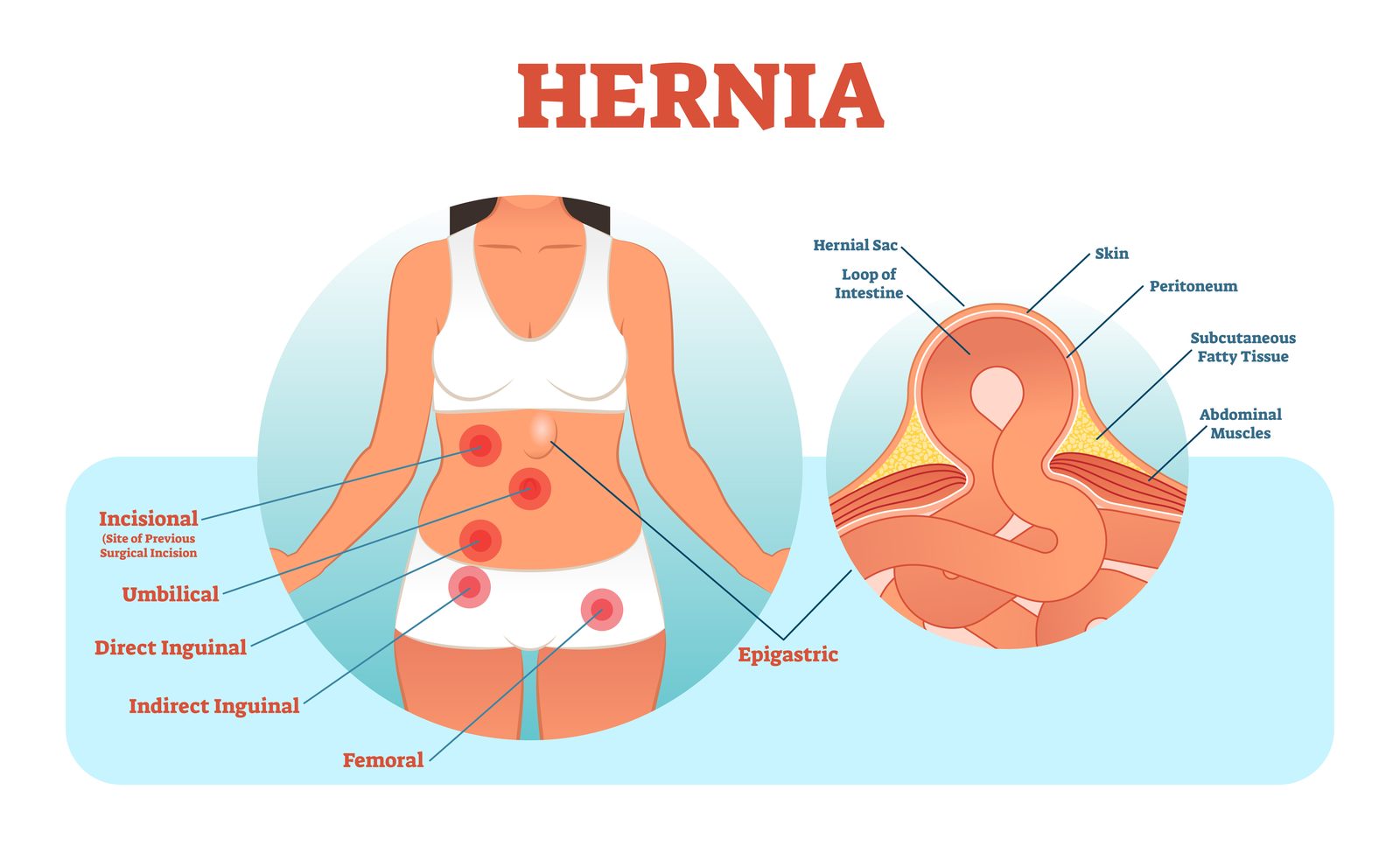
Groin (Inguinal) Hernia
A bulge in the groin or scrotum, aching or burning that worsens with standing, lifting, coughing, or straining, and often improves when lying down.
Umbilical Hernia
A soft bulge at or near the belly button, discomfort with coughing or straining, and an "outie" appearance that wasn't there before.
Incisional Hernia
A bulge or weakness at the site of a previous surgical incision, which may grow over time and cause pain, pressure, or bowel symptoms.
Hiatal Hernia
Severe heartburn, reflux not controlled by medication, nighttime awakenings, burning, and chest or upper-abdominal discomfort.
Illustrations are simplified for patient education. Professional medical illustrations or photos can replace these images at any time via the Media Library.
🔥 Hiatal Hernia Repair▾
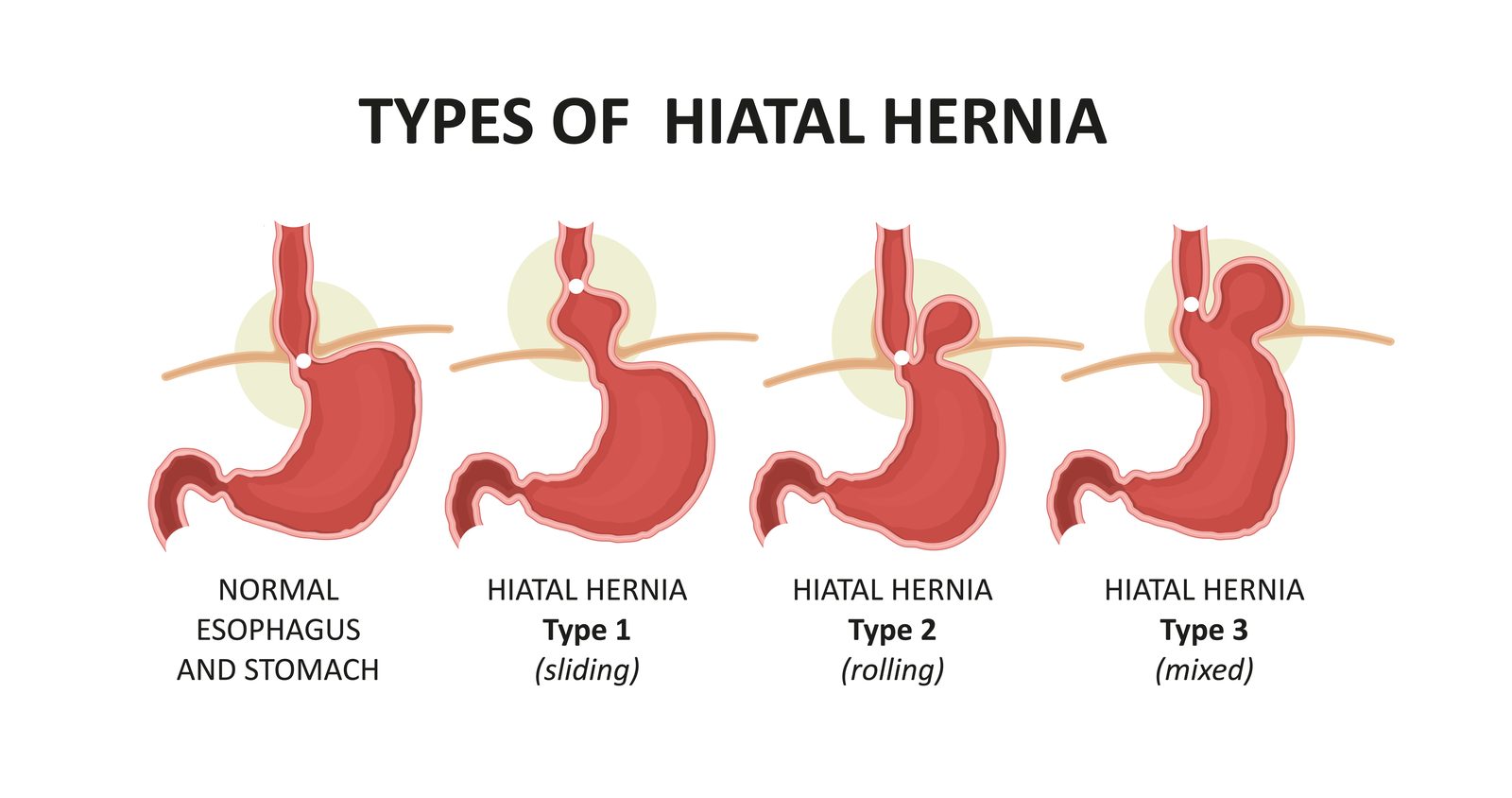
A hiatal hernia occurs when part of the stomach pushes up through the diaphragm into the chest, often causing severe reflux that medication alone cannot fix. Symptoms may include:
- Severe heartburn
- Reflux medications no longer helping
- Acid reflux / regurgitation
- Nighttime awakenings from reflux
- Burning symptoms in the chest or throat
- Persistent discomfort after eating
Our team has advanced fellowship training in minimally invasive repair of hiatal and paraesophageal hernias.
💺 Hemorrhoid Surgery▾
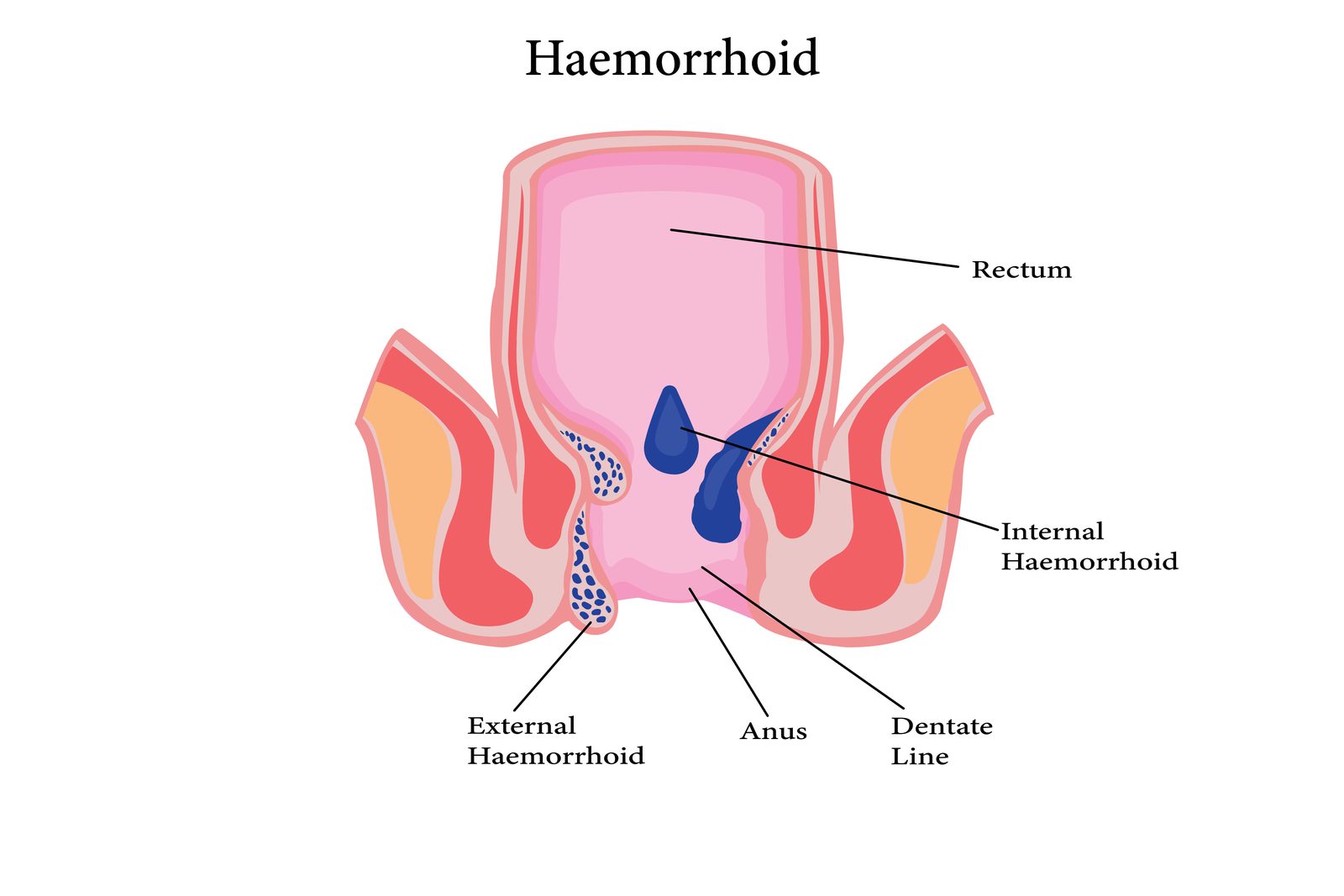
Evaluation and surgical treatment of symptomatic hemorrhoids that have not improved with conservative care. Symptoms people experience with hemorrhoids include:
- Pain
- Discomfort
- Fecal incontinence
- Itching
- Leaking
- Unpredictable bleeding
🔬 EGD (Esophagogastroduodenoscopy)▾
Upper endoscopy to evaluate the esophagus, stomach, and first portion of the small intestine — used to investigate reflux, swallowing difficulty, upper abdominal pain, nausea, and other upper GI concerns.
🎗️ Colonoscopy▾
We offer colonoscopy for three primary reasons:
- Colon cancer screening — routine screening saves lives; most adults should begin at age 45.
- Surveillance — follow-up colonoscopy for patients with a history of colon polyps.
- Diagnostic evaluation — for GI issues such as bloating, abdominal pain, nausea, and vomiting.